
On August 12 and 13, Fátima once again became the meeting point for thousands of migrants during the national pilgrimage of migrants and refugees, with ceremonies presided over by the Bishop of Coimbra, Virgílio Antunes.
This event was part of the 52nd National Migration Week, held from August 11 to 18, under the theme “God walks with His people,” inspired by Pope Francis’ message for the 110th World Day of Migrants and Refugees, which will be celebrated on September 29. These commemorations hold special significance given the ongoing migration context.
Eugénia Quaresma, director of the Portuguese Catholic Migration Work, emphasized the importance of this pilgrimage as “an opportunity to meet emigrants who come on vacation or have returned home, immigrants who have chosen Portugal to live in, and all those seeking protection and refuge.”
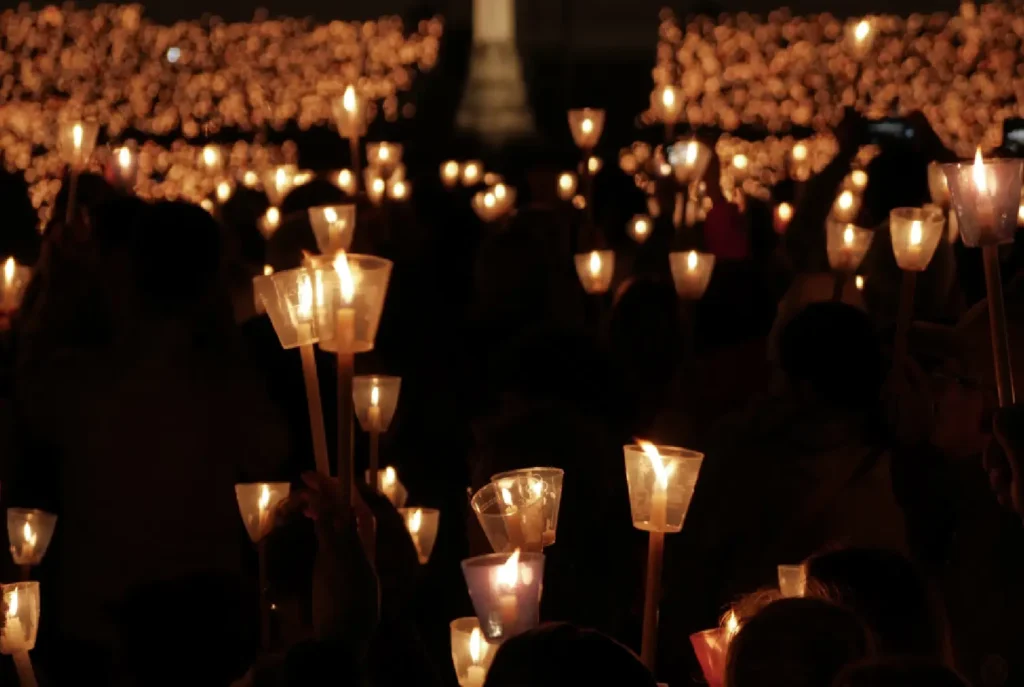
The celebrations at the Fátima Sanctuary began with the recitation of the rosary at the Chapel of the Apparitions, followed by a candlelight procession and the celebration of the word in the prayer area. On Tuesday morning, August 13, the ceremonies continued with the Eucharistic procession, followed by the rosary in the Chapel.
The pilgrimage, also known as the pilgrimage of emigrants, concluded with mass, the blessing of the sick, and the traditional farewell procession.
This edition of the pilgrimage, continuing the 84-year tradition started by a group of young members of the Agrarian Catholic Youth, included the offering of wheat to the Fátima Sanctuary.
The pilgrimage to the Fátima Sanctuary is also closely tied to the Caminhos de Fátima, which represent not only a physical path but also a spiritual journey of faith and hope. Many of those walking towards Fátima during this period are migrants and their families, taking advantage of this time for togetherness.
There is even more in common. Just as pilgrims walk the paths that lead them to the sanctuary, migrants and refugees also tread their own paths in search of peace, safety, and a dignified life. Both journeys are marked by challenges, overcoming obstacles, and the search for a greater meaning that guides each of their experiences.
In the Caminhos de Fátima, one finds the essential values for those who, in their pilgrimages, draw strength from faith and the community to continue on their way.